How to Get Optimal Light
Our approach is pragmatic: rather than spending hours and $$$$ to change the entire house or building, what if we put a filter in front of our eyes?
Basically, in the evening we throw on glasses to block the blue/green range that drives circadian rhythm.
However, there are problems with this approach:
- you still need a bright sun-like light in the morning to wake up and set your rhythm
- glasses don’t help your family
- you are stuck with an abrupt shift to red
- overhead light has a larger impact (light direction matters)
- almost all glasses leak light
So, the ideal solution would be to:
- install an optimal light system that automatically sets the circadian rhythm with optimal whites, ambers, and reds for day, sunset, and night
- use redlight glasses when using screens, after sunset, and/or while travelling
This way optimal light is:
- automatic
- universal for everyone in the house
- available no matter where you go
Bronze Tier: Glasses Only
Section titled “Bronze Tier: Glasses Only”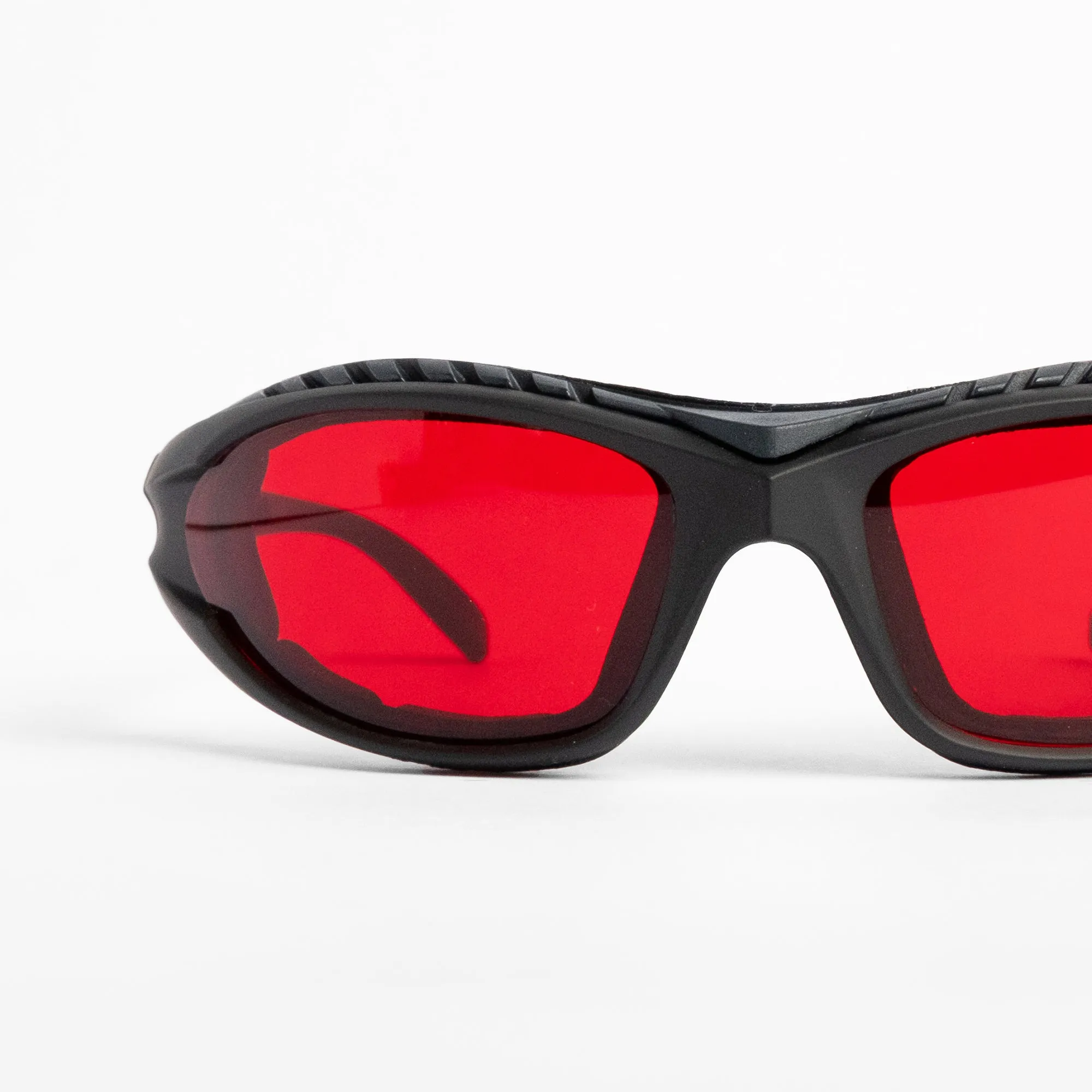
Buy these (or similar). I like these because they have a comfortable wrap around fit. Or Roka’s (Huberman stamped).
Regardless, make sure they are certified to block light below 580 nm or better.
Put them on when the sun goes down or 2-3 hours before bed, minimum 30 minutes. I like to foam roll until drowsy.
Curated glasses:
- these have a nice wrap around https://truedark.com/collections/twilights
- lower price with good spectral performance https://www.blockbluelight.com/products/blue-blocking-night-glasses
- Huberman x Roka https://www.roka.com/collections/winddown-eyewear
Silver Tier: Glasses x RGBW
Section titled “Silver Tier: Glasses x RGBW”Get the above red-light glasses as a catchall and for travelling.
But let’s also setup the house so we have good light hygiene by default.
For the lighting brand we have two options I feel comfortable recommending: Philips Hue or LIFX.
I personally use Phillips Hue and can verify their spectral performance — very solid, nearly perfect.
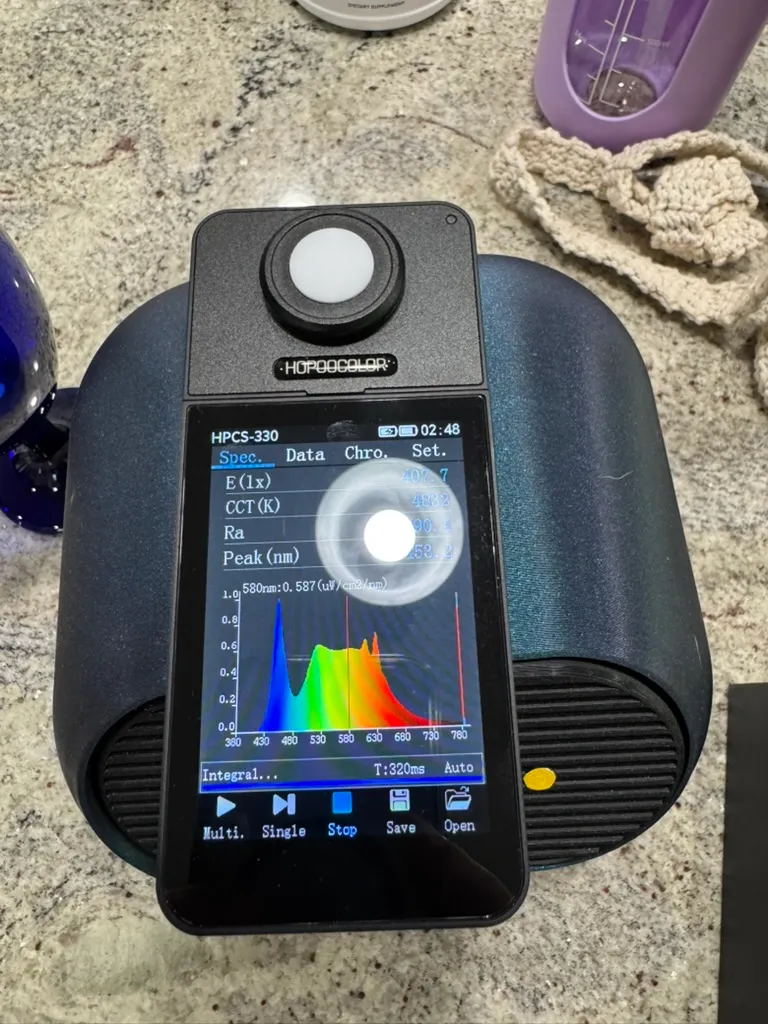
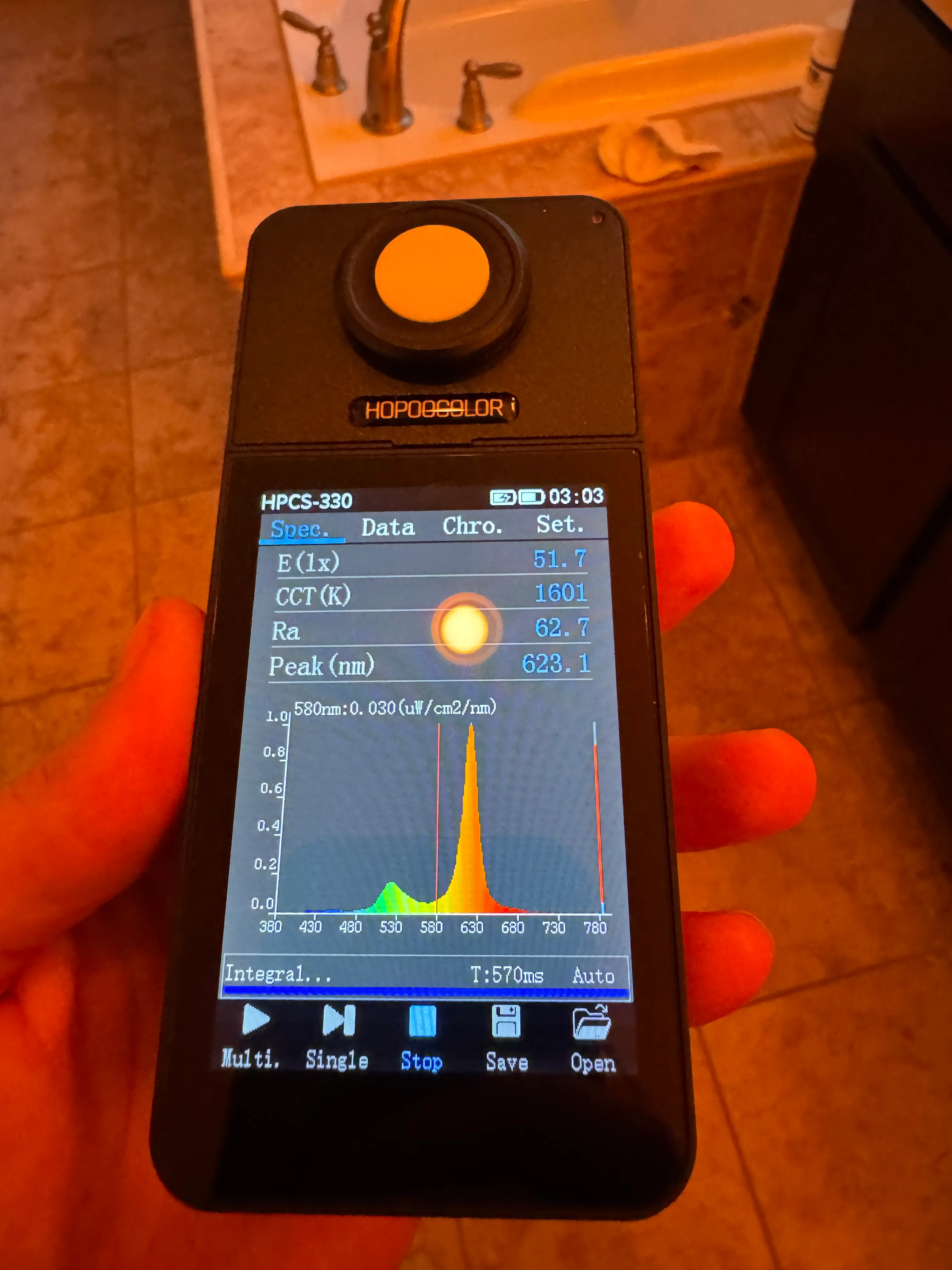
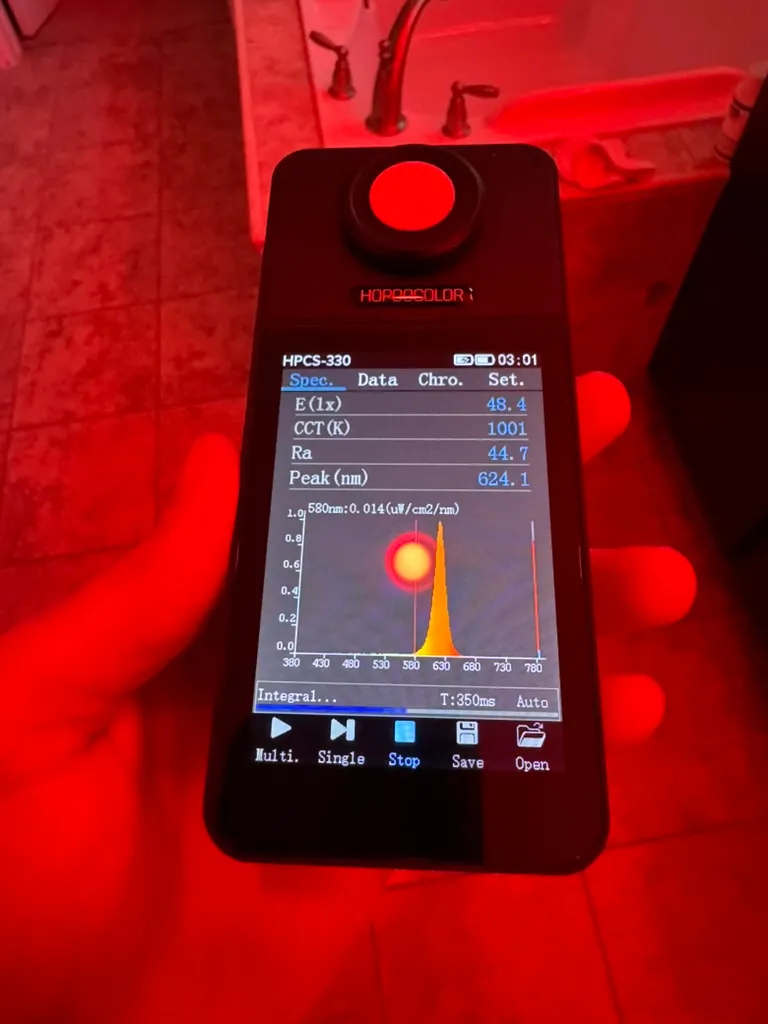
Swap all of your bulbs for LIFX super color bulbs or Philips Hue. While RGBW is a mixture of light and won’t have perfect whites, ambers, and reds. It’s pretty good. Lower color temp isn’t the right metric, but generally it is going to be better.
Do NOT use their circadian settings, they tend to have much whiter light than is optimal. Instead use amber “candlelight” for evening and the darkest red you can select for nighttime. Sadly, there isn’t a great way to enter specific color values so you have to eyeball it.
As for LIFX, for an RGBW it’s hard to beat with a huge temp range from 1000 k to 9000 k, matter, and you can tune to any color https://www.lifx.com/products/lifx-color-800-e26-1pk. For most people this is a good option.
They also have a local network API, a good price, support animations, and let you tween colors. It’s an impressive bulb.
The main drawback is they don’t publish the spectral output so you don’t really know what you are getting exactly without a spectrometer.
Gold: Glasses x Yuji Sunwave
Section titled “Gold: Glasses x Yuji Sunwave”The best spectral lightbulb I’ve found is the Yuji sunwave+.
The spectrum is 99% like that of the sun. The major downside is they aren’t smart bulbs so you need to dim the entire circuit with a smart switch.
Case Studies
Section titled “Case Studies”PENDING — results require 1+ months of sleep data:
- Sleep score before/after the new lighting stack
- Spectrometer readings of room light at the eye, across morning/day/evening/night modes